Trail Elevation Summary
Day Route Distance Duration Highest Point Lowest Point Elevation Gain Elevation Loss Difficulty
Day 1 Malekgalonyane → Makgulong 12 km 3-4 hrs 1665 m 1465 m +357 m -317 m 5.9/10
Day 2 Makgulong → Maboloka 20 km 6-8 hrs 1790 m 1393 m +683 m -603 m 9.3/10
Day 3 Maboloka → Madlangala 17 km 5-6 hrs 1751 m 1517 m +434 m -447 m 7.1/10
Day 4 Madlangala → Qachas Nek 13 km 4-5 hrs 1931 m 1690 m +493 m -211 m 6.3/10
  1. Day 1 Malekgalonyane to Makgulong Moderate
    12 km 3-4 hours +357 m -317 m Rating: 5.9/10

    Skill Required: Hiking

    From the trail head (Malekgalonyane Chalet), the trail heads downhill and along a water canal used by the neighbouring Mariazell Mission for the generation of hydroelectric power. The trail crosses the Jordan river in the valley below the Matseng Village, with the use of a large sturdy bridge.

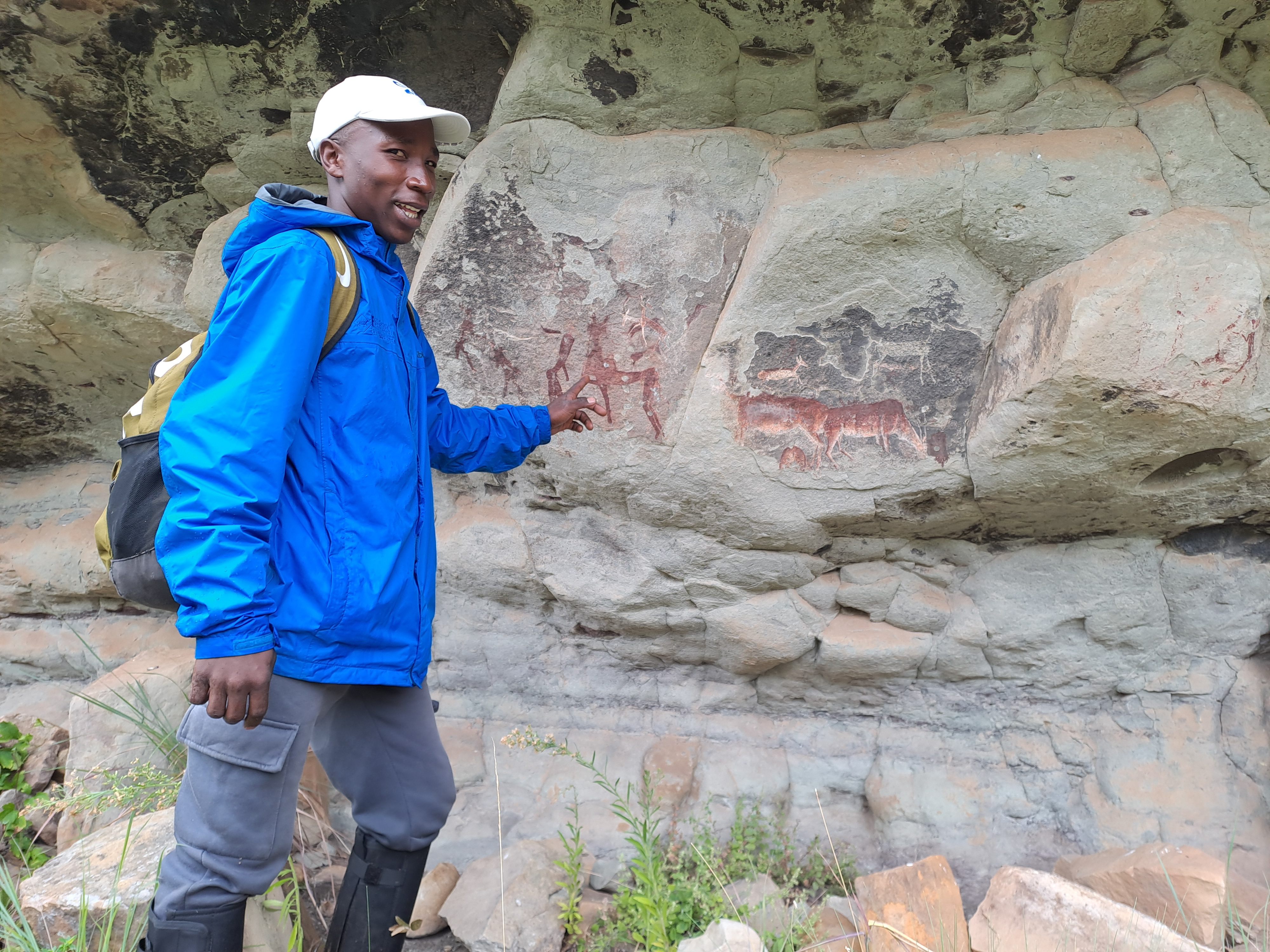
    A San rock art site is located close-by that is worth a quick detour. The trail heads out of the river valley through a wattle forest onto a grassy ridge. The trail passes through a few farm gates and through some maizefields before heading through Ha Masopha Village.

    The trail leaves the village through a wattle forest and along a jeep track through the grassland before descending towards Mpharane village where the overnight chalet – Makgulong - is located.

    This is the shortest and easiest day of the 4-day hike, a nice warm-up for what is to come!

    Environment: Predominantly rural (64.3%), with some natural (21.4%) elements. Regular contact with locals, passes through rural farming/cultural landscape.
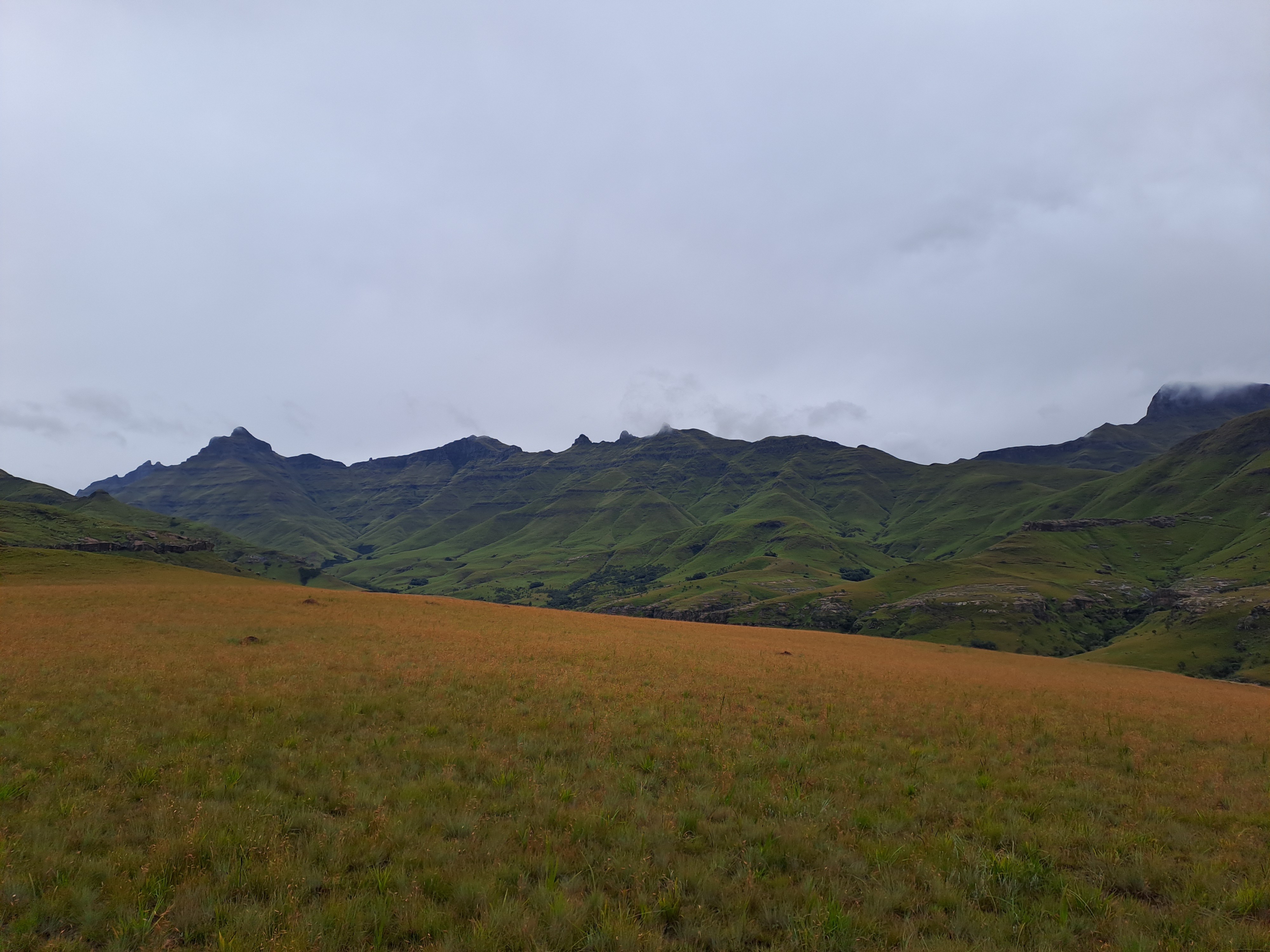
    Day 1 Trail
  2. Day 2 Makgulong to Maboloka Difficult
    20 km 6-8 hours +683 m -603 m Rating: 9.3/10

    Skill Required: Hiking, some Mountain Hiking

    From the Makgulong Chalet, the trail heads downhill through the Matseng Village to a bridge crossing over the Seata river. From the river crossing the trail leads uphill to a grassy plateau. From here the trail meanders through grassland, passes through a few wattle patches, and follows a stream while climbing uphill.

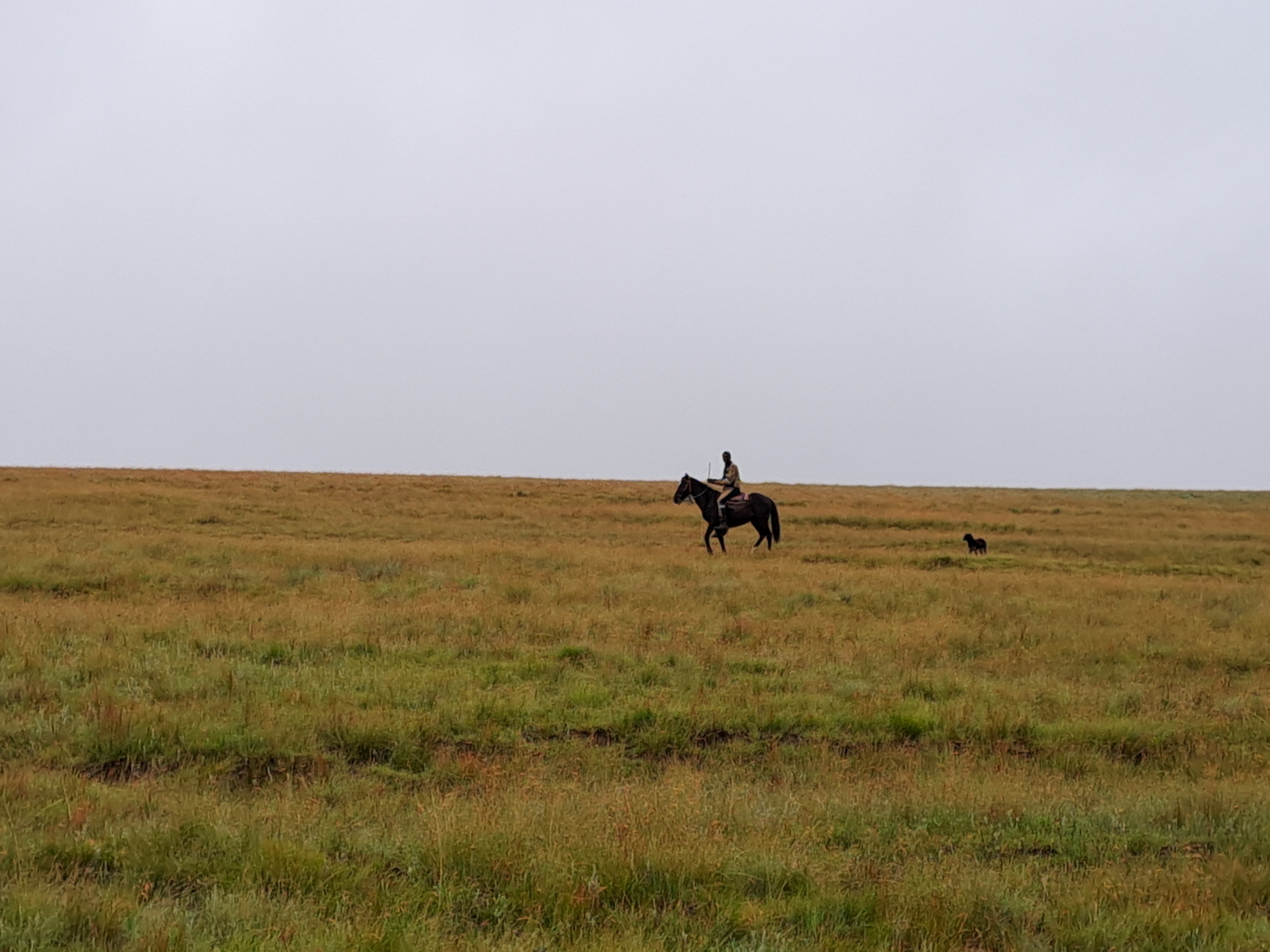
    There are good views of grassy slopes and mountains in the distance. There are some encounters with herders and a shelter for livestock constructed in a sandstone overhang. The trail then leads past some wattle clumps where erosion from braiding (livestock use) is evident.

    Thereafter the trail winds through Protea woodland for a few kilometers, follows and crosses a few streams, passes through some indigenous and wattle forests and passes through some interesting rock outcrops and surfaces, with a dolerite dyke evident.

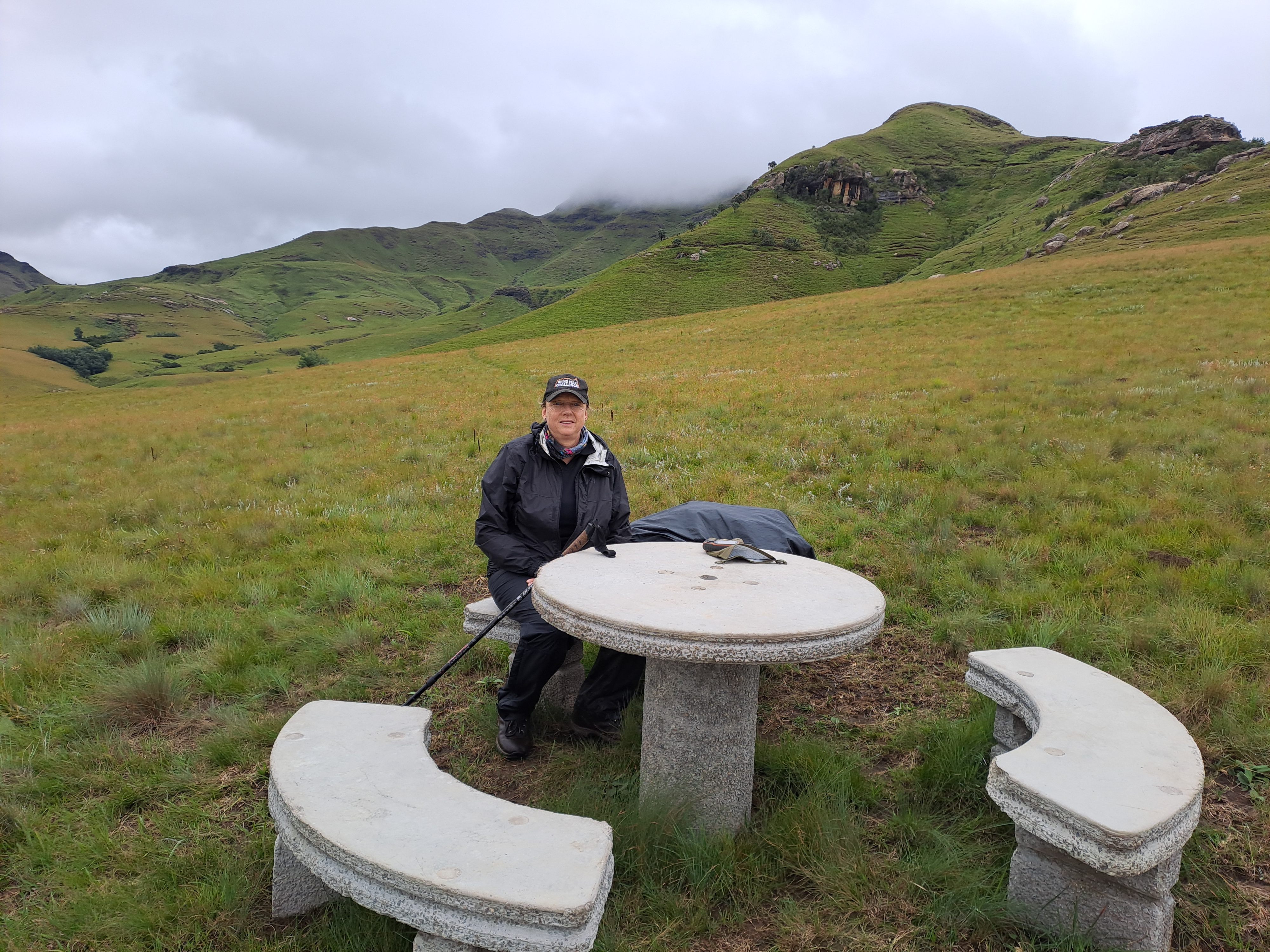
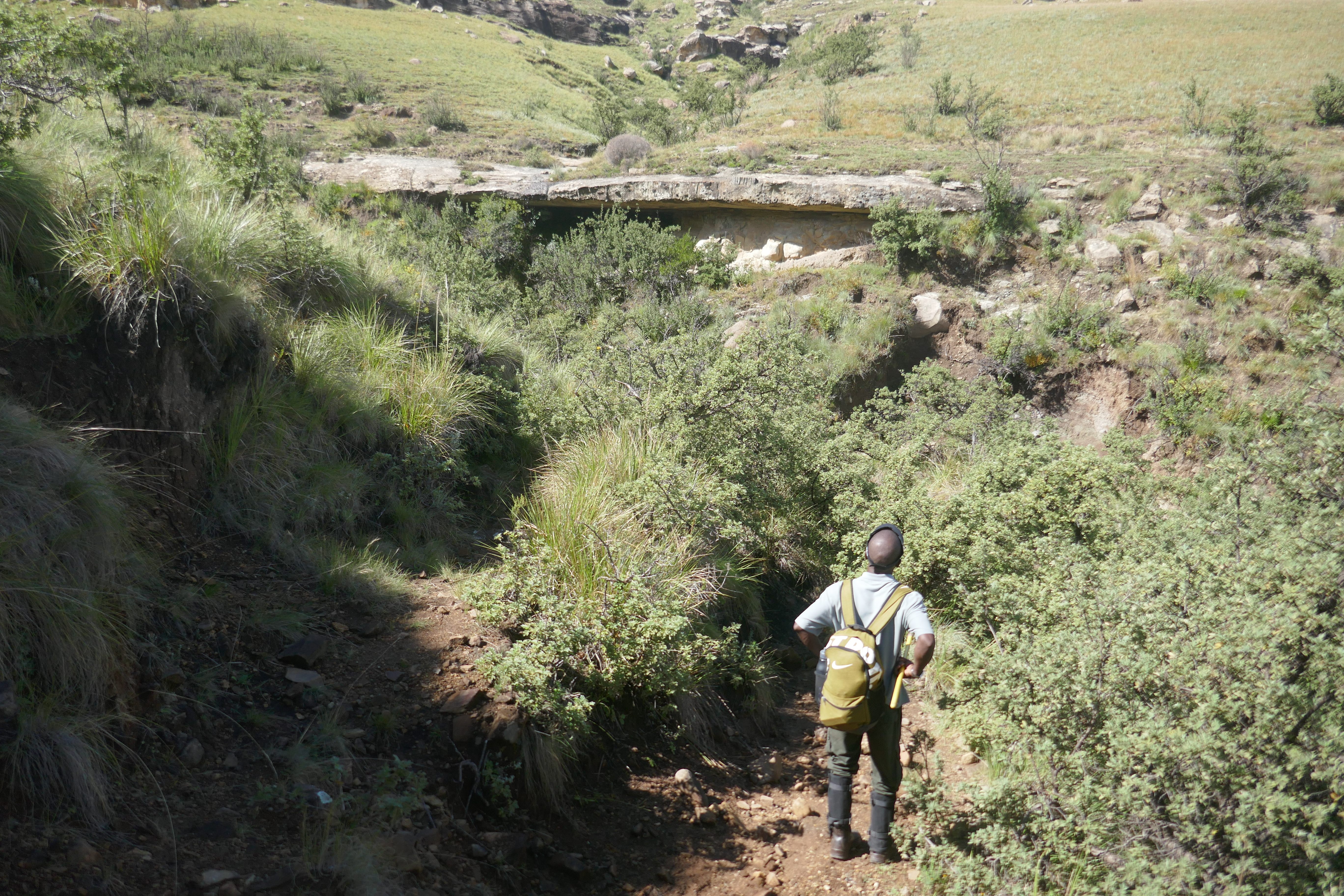
    A concrete picnic table is a surprise find in the grassland a few kilometers from the end, and a good place for a welcome lunch break. Thereafter the trail heads towards some sandstone formations before dipping into the valley where a San rock art site (Morumotsho) can be viewed in the sandstone cliffs overlooking the river valley.

    After a steep downhill to cross the river in the bottom of the valley, the trail winds slowly uphill and follows the contour for another 1-2 kilometers. Another table and benches is encountered near the end of Day 2, overlooking the mountains, river valley and Protea woodland you have just passed through.

    The chalet at the end of Day 2 - Maboloka - is a welcome sight after crossing over a small hill. It is set apart from the Ha Mafaesa Village with views onto the mountain slope and the pleasant sound of bells from livestock in the nearby shelter.

    This is the longest and toughest day of the 4-day hike but the scenery makes it worthwhile.

    Environment: Predominantly natural (57.1%), with some pristine (35.7%) elements. No urban areas. Mostly natural sounds with only intermittent foreign noise.
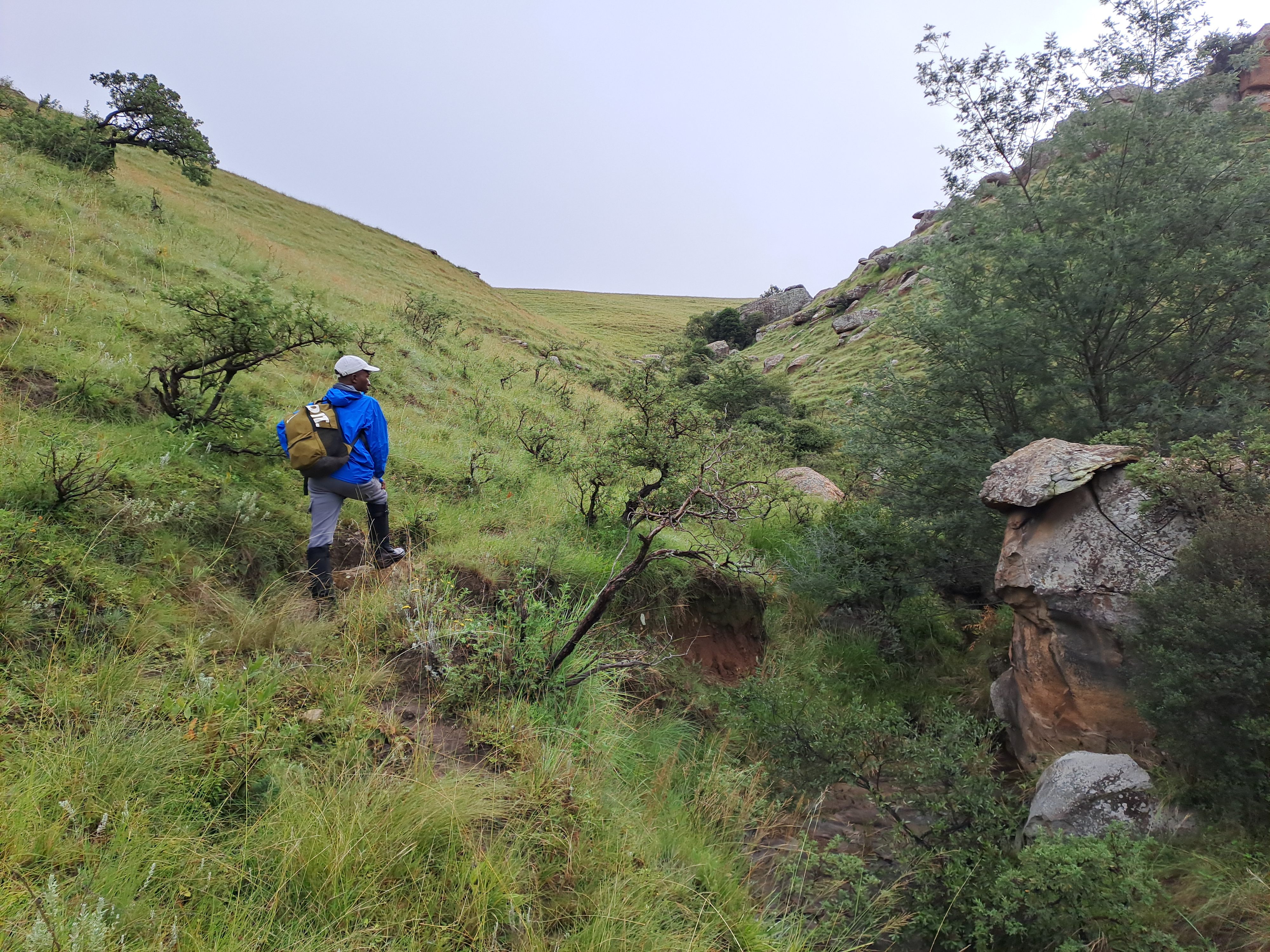
    Day 2 Trail
  3. Day 3 Maboloka to Madlangala Moderate+
    17 km 5-6 hours +434 m -447 m Rating: 7.1/10

    Skill Required: Hiking, some Mountain Hiking

    At the start, the trail retraces its steps from the day before, with a beautiful view of the Three Sisters Peaks, for a few hundred metres before veering off and heading up an incline to reach the contour. After following the contour for some time, it passes over a ridge where another San rock art site is located in the sandstone band on the right.

    As the trail descends into the grassland and Protea woodland below, you encounter a picnic table which provides a good place to rest after about 6 km. From here you have amazing views of the mountains and rock formations along the path ahead. You descend into the valley and the trail passes through a boulder strewn grassland.

    From here you can see a village in the distance which the trail will pass through to get to the overnight hut. The trail descends through the grassland and the edge of the village towards a river which you will cross using a large sturdy bridge. From here you climb the hill on cattle paths and walk through the Makomoreng Village.

    A few ups and downs and another two river crossings, before ascending towards the chalet – Madlangala - that is now visible on top of the hill. The ascent is along eroded cattle tracks which can be muddy and slippery when wet.

    Environment: Predominantly rural (64.3%), with natural (35.7%) elements. No urban areas. Possible contact with local inhabitants while on route.
    Day 3 Trail
  4. Day 4 Madlangala to Qachas Nek Moderate
    13 km 4-5 hours +493 m -211 m Rating: 6.3/10

    Skill Required: Hiking, some Mountain Hiking

    The trail climbs away from the chalet and village and onto the contour. Early on in the day, a conical peak is visible in the distance - the destination. For the duration of the day, the trail winds along the contour towards the conical peak.

    The trail follows the sandstone belt of the Drakensberg foothills over grasslands, through Protea woodlands, across many streams, and through indigenous forest patches and wattle groves. You pass through some incredible sandstone rock formations, meeting some stock and herders along way, some of whom are commuting along the same path.

    The trail ends on the Qachas Nek road where a driver will collect you to take you back to your vehicle. Another picnic table is located near the end of the hike (at 13 km) where you can wait comfortably for your lift.

    You can overnight at Masakala Chalet - also managed by Mehloding Community Trust - near Matatiele before heading home the next day. You are also able to leave your vehicle at this site from where you will get a lift to the start of the hike.

    Special Feature: Natural rock pools available for swimming!

    Environment: Predominantly natural (64.3%), with pristine (35.7%) elements. No urban areas. Mostly natural sounds, very little evidence of human presence.
    Day 4 Trail
Skill Levels Explained
  • Hiking: Uneven terrain requiring balance, good footwear essential
  • Mountain Hiking: Hands may be needed for climbing/descending, steeper sections
What to Expect
  • San rock art sites throughout the trail
  • Views of the Three Sisters Peaks
  • Protea woodland and indigenous forests
  • River crossings with sturdy bridges
  • Interactions with local herders and communities
  • Sandstone rock formations
  • Picnic tables at strategic rest points